What Are Marketing and Sales Funnels?
Here's a sobering statistic: Only 3-4% of your website visitors are ready to buy right now.
What about the other 96%? Without a proper funnel, you lose them forever.
⸻
What Is a Funnel?
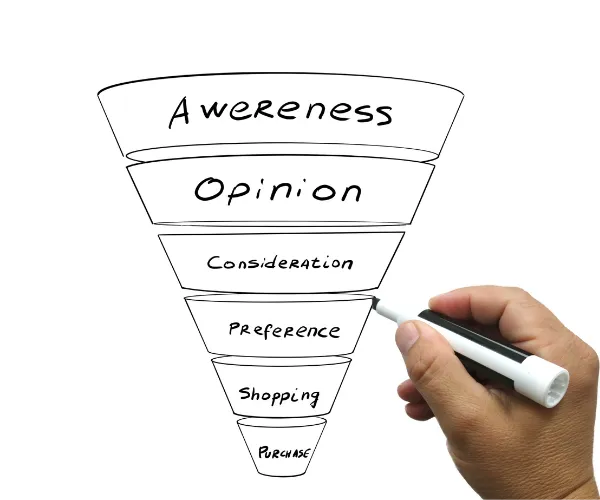
A funnel is the journey customers take from first awareness to purchase (and beyond).
Why "funnel"? • Many people enter at the top • Fewer continue to each stage • Those who remain become customers • Shape resembles a funnel
It's not about pushing people through. It's about guiding them naturally.
⸻
The Funnel Stages
Classic AIDA model:
Awareness: • Customer discovers you exist • First touchpoint • Blog posts, ads, social media • Goal: Get attention
Interest: • Customer wants to learn more • Engages with content • Reads, watches, explores • Goal: Provide value
Desire: • Customer wants what you offer • Sees benefits clearly • Considers purchasing • Goal: Build want
Action: • Customer makes a decision • Purchases or converts • Becomes a customer • Goal: Make it easy
(Post-purchase): • Customer experience • Support and follow-up • Repeat purchases • Referrals • Goal: Create loyalty
⸻
Why Most Websites Fail
The problem with typical websites:
- ●Only target ready-to-buy visitors (3-4%)
- ●No capture mechanism for others
- ●No nurturing process
- ●One-shot approach
- ●Massive waste of traffic
A funnel captures and nurtures the 96% who aren't ready yet.
⸻
Funnel Components
What makes a funnel work:
Lead magnets: • Free valuable content • E-books, guides, checklists • Webinars, video courses • Templates, tools • Exchange for email address
Landing pages: • Focused on one action • Clear value proposition • Strong call to action • Minimal distractions
Email sequences: • Automated follow-up • Value-building content • Relationship nurturing • Soft selling over time
Offers and upsells: • Core product/service • Premium options • Complementary offerings • Subscription options
Retargeting: • Re-engage visitors • Remind of value • Multiple touchpoints • Personalized messaging
⸻
How Funnels Work in Practice
Example: Consulting business
Top of funnel: • Free e-book: "10 Ways to Improve Your Business" • Blog posts answering common questions • Social media presence • SEO-optimized content
Middle of funnel: • Email sequence with tips • Case studies • Free webinar • FAQ and objection handling
Bottom of funnel: • Free consultation offer • Limited-time discount • Testimonials and proof • Easy booking process
Post-purchase: • Onboarding emails • Check-in calls • Upsell opportunities • Referral request
⸻
Key Funnel Metrics
What to measure:
Traffic: • Visitors to your funnel entry points • Source of traffic • Cost per visitor (for paid)
Conversion rates: • Opt-in rate (lead magnet) • Email open rates • Click-through rates • Sales conversion rate
Revenue metrics: • Cost per lead • Cost per customer • Average order value • Customer lifetime value
Identify where people drop off and optimize those points.
⸻
Common Funnel Mistakes
What not to do:
- ●Too complicated – Start simple
- ●No testing – Always A/B test
- ●Weak lead magnet – Make it irresistible
- ●Selling too soon – Build trust first
- ●Ignoring email – It's where conversions happen
- ●No follow-up – Persistence pays
- ●One funnel only – Different audiences need different paths
⸻
Building Your First Funnel
Start here:
1Define your ideal customer 2. Create one valuable lead magnet 3. Build a simple landing page 4. Set up email capture 5. Write a 5-7 email welcome sequence 6. Create a clear offer 7. Drive traffic to the landing page 8. Measure and optimize
Don't overcomplicate it. A simple funnel that works beats a complex one that doesn't.
⸻
How aiwebs.cz Can Help
If you want your website to earn more, having just "pretty pages" isn't enough. You need a thought-out strategy that guides customers through the entire journey – from first meeting your brand to repeated purchases. And that's exactly where aiwebs.cz can help with creating an effective marketing funnel that brings real results for your business.
Interested in this article?
Contact us and we'll help you create your website.